

What Chiropractic BioPhysics Actually Measures
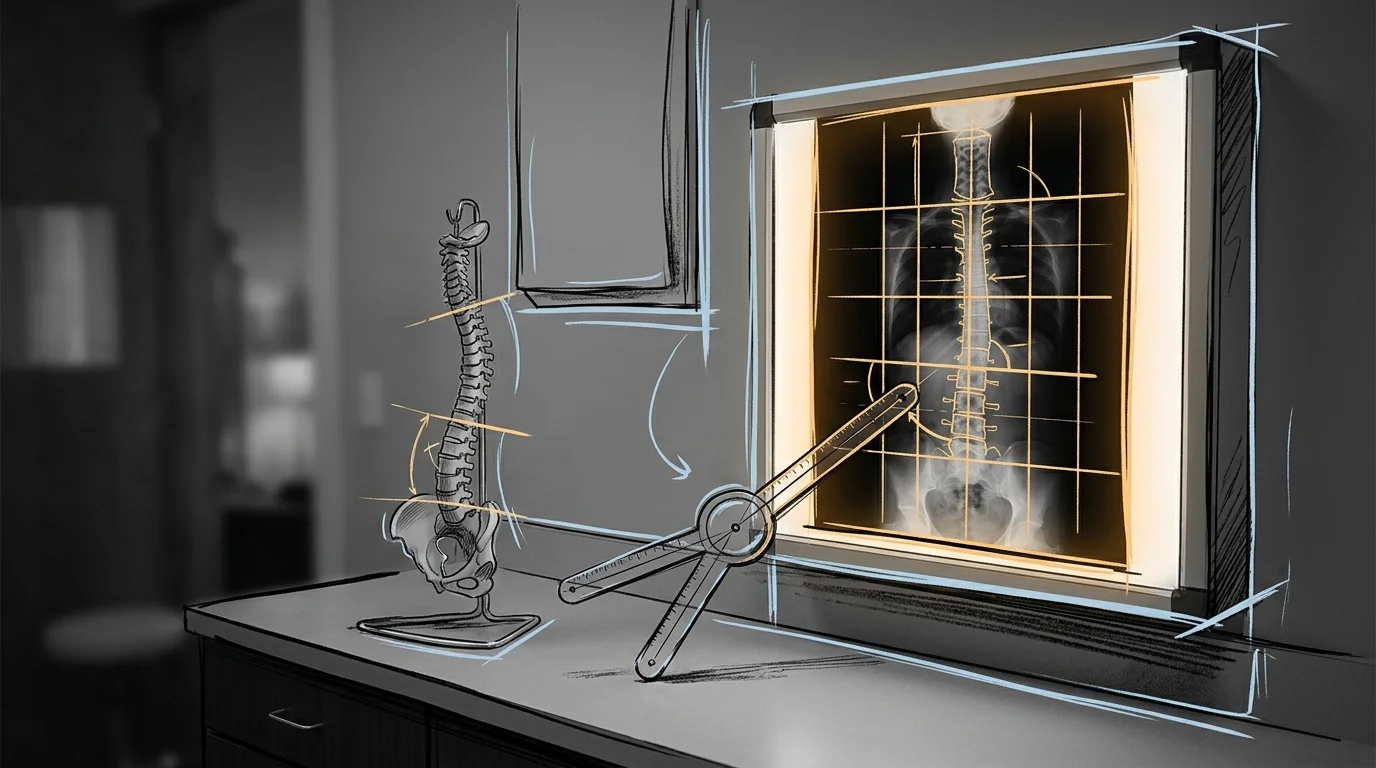
Chiropractic BioPhysics belongs to a broader category known as structural correction. That category is defined by one working assumption: pain and stiffness are downstream signals, not the actual problem.
The actual problem is the underlying architecture of the spine itself. Structural correction aims to identify and correct that architecture directly, rather than managing whatever symptom the misalignment happens to produce.
The Spine as a Measurable Structure
CBP reads the spine as a load-bearing structure with a defined reference model. Not a set of joints checked one at a time. Every curve gets measured against that blueprint, in degrees and millimeters.
That is why the measurement standard behind corrective spinal alignment matters more than any single adjustment session. You cannot correct a structure until you actually know how far it has drifted from the reference model.
Where CBP Sits Inside the Broader Structural Correction Field
Within structural correction as a field, Chiropractic BioPhysics is one specific, evidence-based protocol, not a synonym for the category as a whole. Other structural methods exist, but few carry the same volume of published radiographic outcome data.
And that distinction matters for anyone weighing their options. The goal of CBP is to bring the spine back to its ideal, mathematically modeled alignment, restoring long-term function rather than just quieting discomfort for a while.
Why Symptom-Only Adjustment Models Miss the Structural Problem
Most conventional chiropractic runs on the same play: quiet the pain, quiet the stiffness, send the patient home. And once the discomfort fades, the visible reason for care fades right along with it.
That is the mechanism working exactly as designed, not a side effect of it. Build the whole care story around a symptom disappearing, and the story ends the moment the symptom does — even when the structure that caused it hasn't moved.
The Problem With Pain-Triggered Care
Pain-triggered care re-checks a joint whenever it flares, then re-treats it until it calms back down. Nothing in that loop ever asks whether the underlying architecture changed, and that is the same architecture PostureRay analysis and digital X-rays map when locating a spine's exact line of force.
Structural correction goes the other way. It sets out to find and correct the architectural problem itself. A pain-triggered model has no comparable endpoint, so the same segment flares, calms, and flares again, on and on.
How the Harrison Spinal Model Sets the Target for Correction
The Harrison targets only mean something when there is a baseline film to measure them from. Palpation and range-of-motion checks describe how a joint behaves on a given day. They cannot describe a curve's angle, and they cannot confirm that angle moved after a defined course of care.
| Spinal Region | Reference Curve | Ideal Value | What Deviation Indicates |
|---|---|---|---|
| Thoracic (T8–T12) | Kyphosis | +19° | A curve reading above this reference value signals thoracic structural deviation requiring correction rather than a stable, ideal curve. |
| Lumbar (T12–L2) | Lordosis | −6° | Measured curvature that departs from this figure indicates a structural shift away from the modelled ideal alignment in that region. |
| Full Spine | Scoliotic Curve Pattern | Confirmed only by radiograph | A curve visible on posture alone cannot be classified as true structural scoliosis without imaging confirmation. |
Reading the Numbers: Kyphosis and Lordosis Reference Values
Harrison modelling studies fixed the numbers: the normal kyphosis from T8–T12 should measure +19° and the normal lordosis from T12–L2 should measure −6°. That gives Chiropractic BioPhysics fixed reference values instead of a subjective read on a curve, a standard documented in PubMed Central from the modelling literature. Every patient's radiographs get measured against those same figures, and that comparison is what turns a treatment plan into a target rather than a guess — the same measurement logic covered in how spinal angles are quantified in millimeters.
How a Flawed Diagnostic Process Fails Without Imaging
A flawed diagnostic process assumes visible curvature always means true scoliosis. X-ray screening of the spine is the only way to differentiate true scoliosis from pseudo-scoliosis, a distinction confirmed in published research data on radiographic diagnosis. Skip the imaging, and a temporary postural curve gets treated as a structural one.
What the Research Shows About Structural Change Over Time

A single case report proves structural correction can happen in one patient. Pool the data across many cases, though, and you find out whether that pattern holds up.
| Measurement | Before Correction | After Correction | Outcome Measure |
|---|---|---|---|
| Cervical Lordosis | Baseline curvature prior to care | 14-degree average improvement across pooled case reviews | 41 unique manuscripts, 40 treatments over 16 weeks |
| Forward Head Position | Baseline head position prior to care | 12 millimeter average reduction across pooled case reviews | 41 unique manuscripts, 40 treatments over 16 weeks |
| Cervical Curvature (ARA C2-C7) | Deviation from reference alignment prior to care | 30.1° improvement documented on repeat imaging | Single-patient radiographic case outcome |
| Head Position (Tz C2-C7) | Deviation from reference alignment prior to care | 15.6 millimeter improvement documented on repeat imaging | Single-patient radiographic case outcome |
| Grip Strength | Reduced strength prior to care | Left 45.3 kg and right 49.4 kg following treatment | Single-patient functional outcome measure |
| Subjective and Objective Measures | Symptom and function status at start of care | Improvements maintained at follow-up | Assessment performed approximately nine months after initiating care, failed back surgery syndrome case |
Cervical Curve Correction Across Multiple Case Reviews
A review of 41 unique manuscripts documented an average 14-degree improvement in cervical lordosis and a 12 millimeter reduction in forward head position after 40 treatments over 16 weeks, a dataset described in this published academic reference. That figure reflects a compiled body of cases rather than one clinician's account. Trust makes a poor measuring stick. Documented progress comes from comparing X-rays and posture measurements taken before and after a course of care delivered through chiropractic adjustments for structural correction.
Correlating Radiographic Change With Reported Outcomes
Radiographic change and reported outcomes tend to move together. One follow-up done roughly nine months after starting Chiropractic BioPhysics care, in a patient with failed back surgery syndrome, showed those gains still holding, a finding recorded in this PubMed Central case report. That durability lines up with the quality-of-life and grip-strength improvements already tied to earlier curvature and head-position corrections.
How Mirror Image Adjustments and Traction Fit Into a Correction Protocol
Correction protocols are not delivered as a single generic sequence. Mirror Image adjustments push a misaligned segment in the direction opposite its measured deviation, while extension traction loads the spine into the position the Harrison Spinal Model defines as ideal. A patient working through cervical kyphosis correction needs a different combination of adjustment vectors and traction angles than a patient carrying a lumbar curve deficit. One documented case pairing Mirror Image procedures with traction produced cervical curvature correction of 30.1 degrees and head position improvement of 15.6 millimeters, alongside grip strength gains to 45.3 kilograms on the left and 49.4 kilograms on the right, a pattern reported in PMC's published case findings.
Sequencing a Structural Correction Plan
One standard care plan cannot fit every deviation a spine presents. A neck that lost some of its curve and a lower back showing years of wear are two different correction projects, each with its own pacing and checkpoints. Sequencing exists for exactly that reason: the nine-month follow-up data already covered showed durable change only when the plan tracked the individual curve, not a template.
Distinguishing True Structural Deviation From Temporary Postural Strain

From across the room, a structural finding and a temporary postural strain look exactly the same. Telling them apart takes more than a glance at how someone stands.
| Assessment Method | What It Can Detect | What It Cannot Confirm |
|---|---|---|
| Visual Observation | Uneven shoulder height, forward head carry, or an asymmetric stance | Whether the underlying curve angle has changed or how it compares to a reference value |
| Palpation and Range-of-Motion Testing | Tenderness, restricted movement, and muscle tension on the day of exam | A curve's measured degree, or whether that degree shifted since a prior visit |
| X-Ray Radiographs | The actual angle of spinal curvature measured against a fixed reference value | Nothing beyond what the image itself shows — but it is the method that confirms true scoliosis versus pseudo-scoliosis |
| Symptom Self-Report | Whether pain or stiffness feels better or worse to the patient | Whether the spine's structure has actually corrected or merely stopped flaring |
Why Palpation Alone Cannot Confirm a Structural Finding
Palpation catches tenderness, tension, and restricted motion on the day you feel the spine. But none of that puts a number on a curve's angle, and none of it confirms that angle moved since the last visit. A method that cannot measure deviation cannot confirm a structural change ever happened.
When X-Ray Screening Changes the Classification
X-ray screening changes the classification the second a curve's real angle gets measured against a fixed reference value. That same comparison is the only way to separate a true structural deviation from pseudo-scoliosis instead of guessing. And the classification, not the symptom, decides whether correction is even the right course of care.
Frequently Asked Questions
A few questions come up consistently once the architecture and evidence above are on the table. The answers below stay specific to the mechanics, not the marketing.
How is Chiropractic BioPhysics different from a regular chiropractic adjustment?
A regular adjustment responds to whatever hurts or feels restricted that day. Chiropractic BioPhysics measures the spine against a mathematically modeled ideal first, then builds every adjustment toward closing that one specific gap.
Does structural correction hurt, and how long does a typical treatment plan take?
Adjustment force and traction load get set to each patient's measured deviation, not a fixed intensity. And the plan runs over a defined course of visits, so structural change gets tracked instead of guessed at.
Are the results from Chiropractic BioPhysics permanent?
Results hold when the architecture itself has shifted toward the reference model, not when a symptom simply faded. Durability gets confirmed by re-measuring the spine, never by asking whether the pain came back.
Why does CBP rely so heavily on X-rays when other chiropractors don't?
X-rays put a number on a curve's exact angle against a fixed reference value. Palpation cannot. Without that baseline, there is no way to confirm correction happened, or whether the curve is even structural.
Can Chiropractic BioPhysics help with conditions other than back and neck pain?
Because the protocol corrects spinal architecture rather than chasing a specific complaint, its scope extends to any condition tied to curvature or head position deviation. Grip strength and quality-of-life measures have moved alongside those corrections in documented cases.
What is the Harrison Spinal Model and how is it used in treatment?
The Harrison Spinal Model is the set of geometric reference values that define ideal curvature at each region of the spine. Chiropractic BioPhysics measures a patient's radiographs against those values to set the correction target and track progress toward it.
The Bottom Line
A spine either matches its reference model, or it doesn't. Chiropractic BioPhysics exists to close that gap. It was never built to quiet whatever symptom the gap happens to throw off.
Symptom-chasing calms the ache. Structural correction rebuilds the architecture underneath it, measured against the Harrison Spinal Model instead of a hunch about how someone feels that week. Only one of those approaches ever gives a spine a defined endpoint.
The evidence favors correction over management every time the two are compared on measurable terms. For anyone weighing which model of care actually earns that comparison, Huntington Beach Chiropractic's adjustment approach is the place to see how a structural correction plan gets built around an individual spine.